Logistics Document Processing for Automated Freight Operations
Document processing determines how much freight automation actually works.
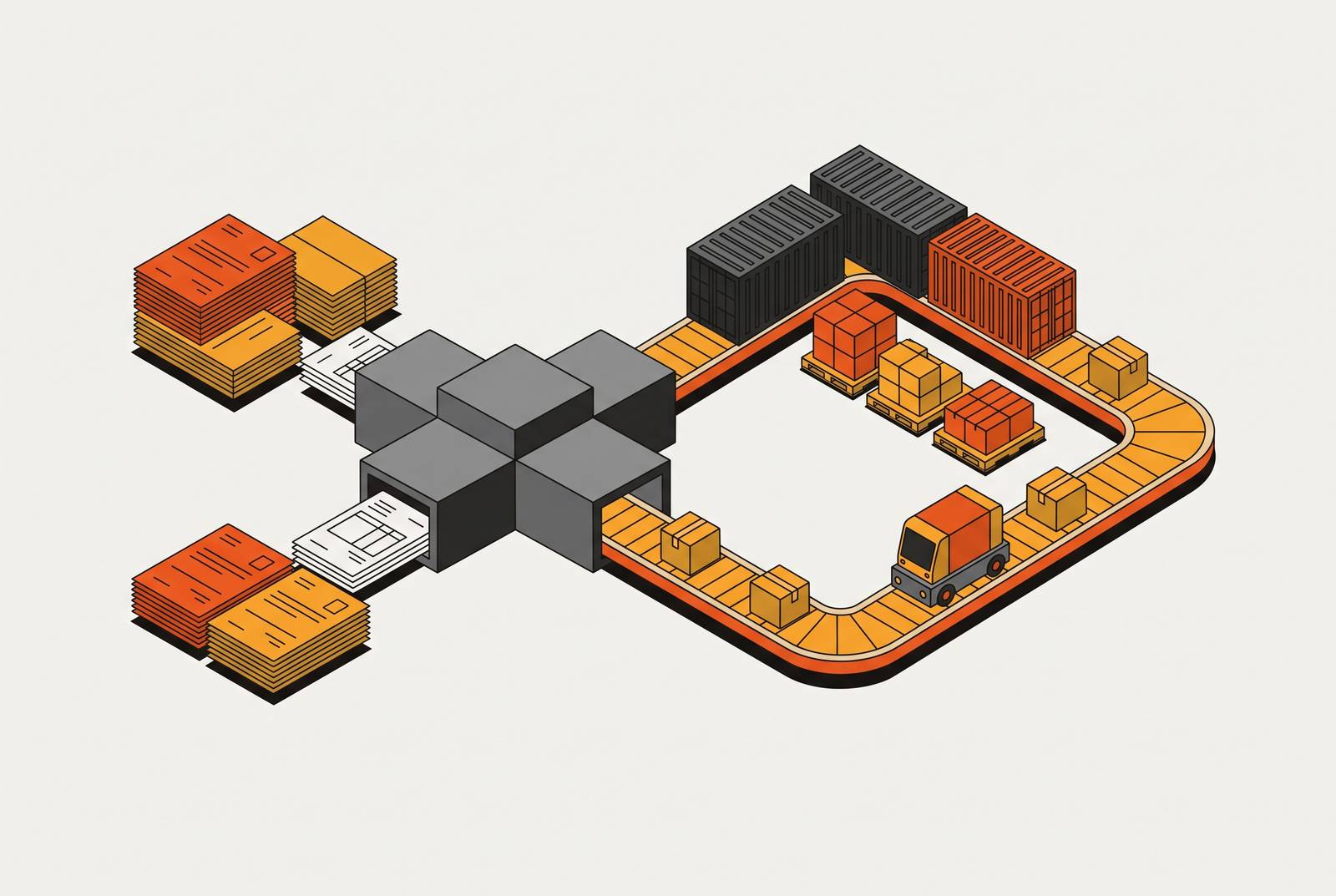
Every automated freight workflow, whether it's quoting, booking, customs filing, invoice audit, or carrier onboarding, begins with a document that has to be read, classified, and turned into structured data before any downstream system can act on it. That single fact explains why document processing, not routing intelligence or TMS sophistication, sets the pace for how much of freight automation actually works.
Freight is document-dense by nature. A single international shipment generates a stack of paperwork: bills of lading, commercial invoices, packing lists, customs declarations, airway bills, certificates of origin, dangerous goods declarations, rate confirmations, proofs of delivery. These arrive by email, through portal uploads, as scanned PDFs, and as mobile photos snapped at a dock. The manual baseline for handling this volume is expensive and slow, and the errors it produces appear downstream as customs holds, carrier disputes, and delayed billing.
None of this means AI is coming for the judgment calls that dispatchers and pricing desks make. Automation targets the communication and paperwork layer that surrounds those decisions, and document handling sits at the center of that layer. The bottleneck is sequential: a quoting agent cannot respond in seconds if it's waiting on a human to extract the lane from an emailed rate request. A customs filing agent cannot run until the commercial invoice has been parsed. TMS automation stalls at the exact point where structured data is supposed to enter the system and hasn't arrived yet. Document quality, in other words, determines how much of the automation stack built on top of it can actually function.
What freight document processing involves beyond OCR
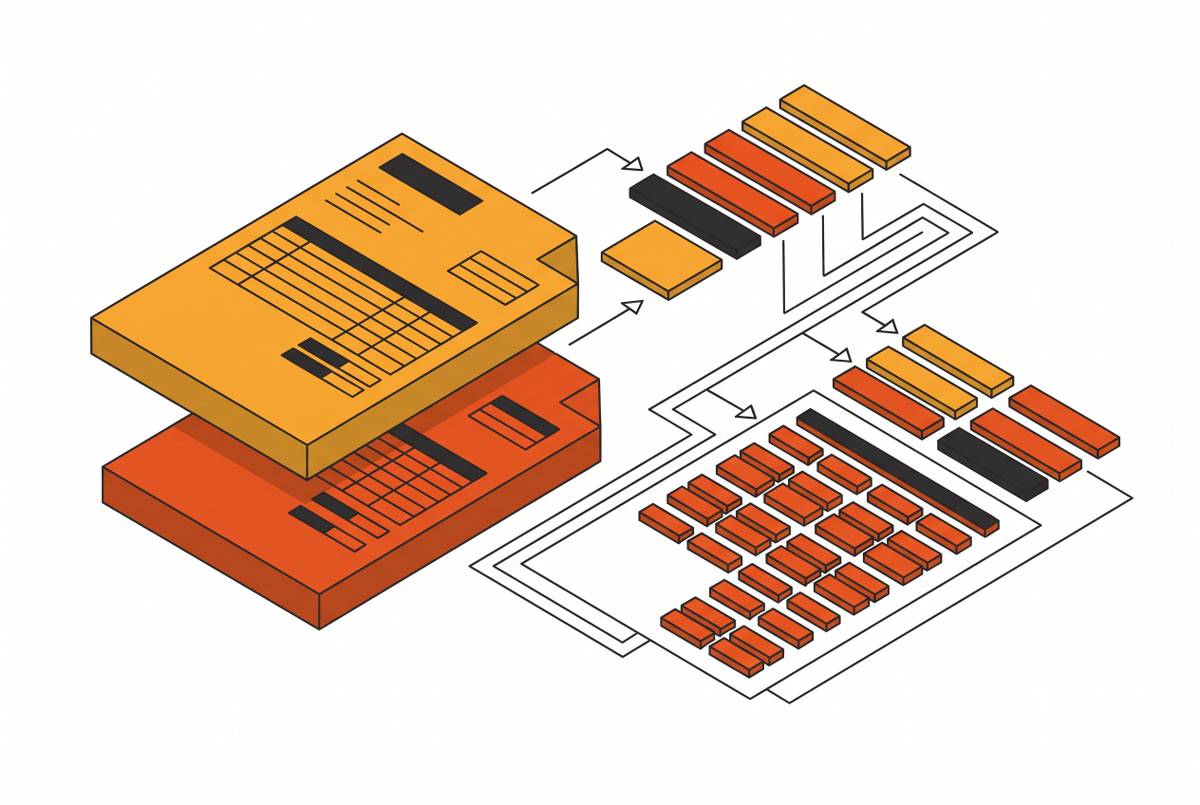
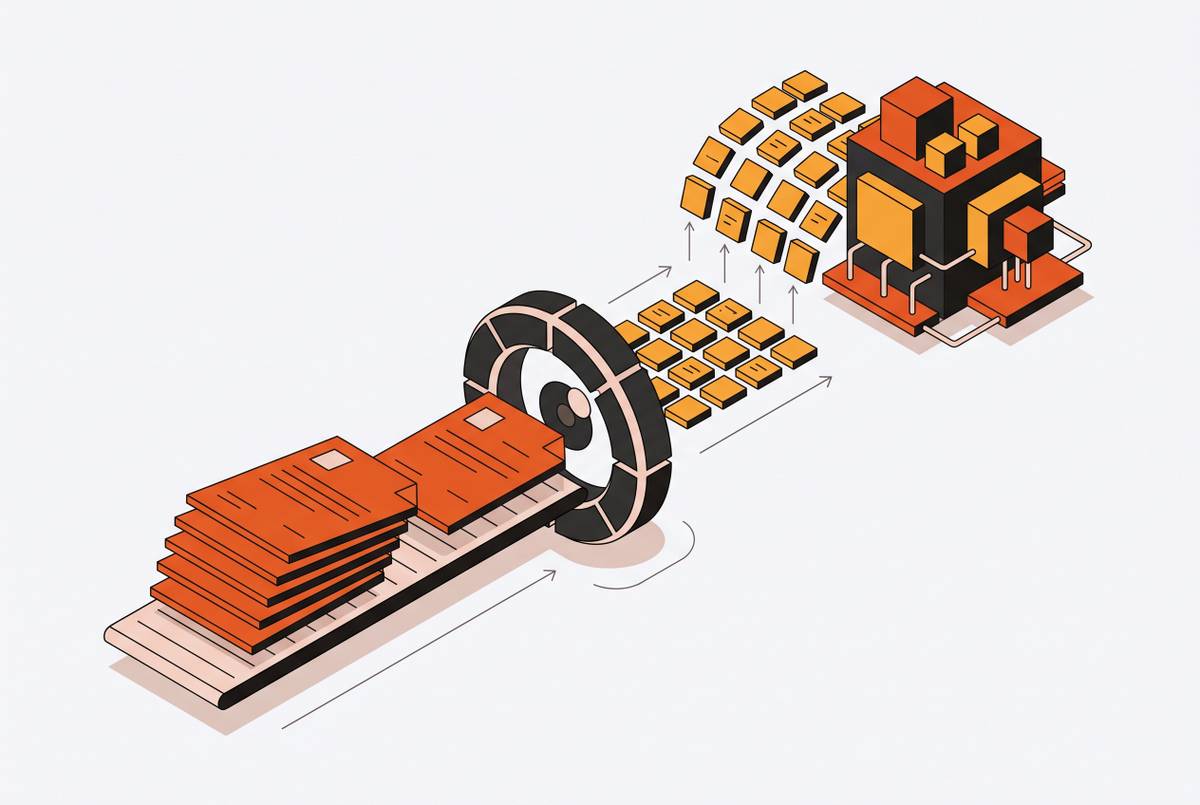
OCR reads text off a page. Intelligent document processing does something broader: it classifies freight documents, extracts the key fields, validates the data against business rules, routes exceptions to the right reviewer, and prepares output that's ready for a TMS to ingest. Conflating the two undersells the scope of what a production freight pipeline has to do.
The architecture that recurs across production deployments runs as a connected sequence, where each stage's output becomes the next stage's input. Documents arrive through inbox monitoring, which ingests files from email, portals, uploads, or API feeds. Validation checks those extracted fields against business rules and existing shipment records before anything touches the TMS, so that automation catches errors at this stage instead of letting them flow downstream and introduce risk. Exception routing sends high-confidence documents through automatically, while low-confidence or inconsistent ones go to a human reviewer. TMS handoff writes the validated, structured data into the transportation management system, which is what triggers the next operational workflow.
The highest-value targets for this pipeline are the documents generating the most manual work: bills of lading, proofs of delivery, rate confirmations, customs declarations, commercial invoices, packing lists, delivery notes, CMR consignment notes, and dangerous goods declarations. The core technical challenge across all of them is format variability. The same document type can appear as a scanned PDF, a mobile photo, a digitally native file, or text embedded in an email body, depending on the supplier, and a production system has to handle every version without maintaining a separate template for each one. Trusting extraction blindly compounds the risk: a wrong invoice that posts because no confidence threshold caught it is a concrete financial error, not an abstraction from a benchmark table.
Why accuracy on complex freight documents falls short of benchmark headlines
Published OCR accuracy figures, the 98 to 99 percent numbers that circulate widely, describe performance on clean, printed text.
The benchmark landscape itself reflects this gap. Handwriting is a persistent, freight-specific version of this problem: handwritten annotations on bills of lading and damage notations written by hand at the dock are common, and production accuracy on handwritten content lags printed text significantly across every major platform.
Accuracy also has two separate failure modes that get conflated. A system can read every character on a page correctly and still misassign a field to the wrong row, column, or section of the document: that is a layout failure, distinct from a text-extraction failure. Benchmarks that report only one of these metrics cannot predict how a system will perform on a complex freight document. This gap between benchmark and production costs real money in customs holds, disputed invoices, and reconciliation errors, so it cannot be dismissed as a corner case. Intelligent document processing exists to turn documents into validated operational data, not simply to digitize them, and a system that achieves high character-level accuracy while misreading a table structure or misclassifying a field produces output that is operationally wrong regardless of what its OCR score says.
Well-built production systems close this gap through system design, not by swapping in a better model. If you're evaluating document processing infrastructure, ask for benchmarks run on real regulated documents and complex freight formats, not clean-text OCR figures. Accuracy on a digitally native invoice says nothing about accuracy on a handwritten bill of lading or a degraded customs declaration.
Confidence scoring and exception routing for production extraction
A document processing system that posts strong average accuracy numbers but doesn't surface its own uncertainty is dangerous to operate, because the failures it conceals are exactly the ones that cause customs holds and disputed invoices. Confidence scoring is what makes extraction decisions legible to the rest of the system and safe to act on.
Calibration is the requirement behind confidence scoring: a model's stated confidence score has to match its actual accuracy at that confidence level once it's running in production. The correct architecture sets a confidence threshold that routes low-certainty documents to a human reviewer, preventing a wrong invoice from posting. That design pattern is what makes automation trustworthy.
In practice, exception routing in freight looks like this: high-confidence extractions flow directly into TMS entry. A further production capability sits on top of single-document confidence: cross-document validation compares extracted data across the full document set for a shipment, catching a weight on the packing list that disagrees with the bill of lading, or an invoice total that doesn't reconcile with the rate confirmation, before either becomes a billing dispute or a customs rejection.
The business case for building confidence scoring this carefully isn't precision for its own sake.
What the document pipeline must deliver for TMS handoff
Document processing doesn't deliver value until its output sits inside the TMS in a form the system can act on. The handoff is where pipeline quality turns into something operations teams can directly see and feel, no longer just an internal metric.
Most automation projects skip a prerequisite for making any of this work: a unified load record in the TMS carrying the customer, carrier identifiers, rate confirmation, bill of lading, proof of delivery, accessorials, and carrier invoice. Automating on top of fragmented records just automates the fragmentation faster. TMS-ready structured output means field names that match the TMS schema exactly, values formatted correctly, relationships between fields preserved so that a line-item quantity stays tied to its commodity code rather than floating free as an unattached number, and a confidence signal attached so the TMS workflow knows which records to route to review.
Several downstream workflows depend entirely on getting this handoff right. Data quality and integration complexity are still the leading reasons logistics AI deployments stall after initial testing, and both problems trace back to this same handoff point.
How C.H. Robinson's agent fleet shows what production document infrastructure enables
C.H. Robinson's AI agent deployment is the most documented production case of freight automation running at scale, and it shows concretely how document processing produces the structured data that every agent built on top of it depends on. The fleet covers quoting, load booking, appointment scheduling, in-transit tracking, document handling, and carrier payment, and each of those agent types depends on structured data that the document layer produces first.
The figures from this deployment are specific. The quoting agent replies to roughly 2,600 quote requests a day, and each reply takes about 32 seconds. The LTL freight classification agent takes about 10 seconds to classify freight it's reasoning through for the first time, and drops to three seconds after more training on that freight type, replacing a manual process that took more than ten minutes on average.
Through its Lean AI strategy, C.H. That's a documented decoupling of staffing from volume, and it depends on document automation working reliably at every stage of the pipeline behind it. In June 2026, the company launched the Lean AI Engineer, described in its own announcement as the first AI technology designed to both operate a shipper's global supply chain and continuously assess and improve its performance. It autonomously handles 92% of 4PL shipments globally across trucking, ocean, air, and rail, and it can assess an entire supply chain in 25 to 30 minutes, compared with assessments that typically take up to four weeks.
The structural point these numbers make is straightforward: the quoting agent's 32-second response time, the classification agent's 3-second result, and the tracking agent's monthly throughput are all downstream of document processing that works reliably. Slow or inaccurate document intake would bottleneck every one of these agents, no matter how well the agents themselves were designed.
The document types and extraction fields that freight operations depend on most
Not every freight document carries the same urgency or the same technical difficulty, and the right place to start automating is wherever manual work is largest or errors cascade furthest downstream.
Bills of lading carry shipment references, parties, commodity descriptions, weights, and special handling requirements, and they're often handwritten or partially handwritten, which makes them technically harder than digitally native formats. Proofs of delivery matter because a POD that lands in the system the day it's signed gets invoiced the same week, so any delay in capture pushes the billing cycle back directly. Commercial invoices carry currency, line items, HS codes, and declared values, and errors here cascade into customs holds and carrier disputes. Carrier onboarding packets contain insurance certificates, operating authority, and W-9s, and onboarding a carrier in minutes rather than a day widens the pool of carriers available to quote. CMR consignment notes govern a regional road freight market and come with their own field schema and regulatory requirements.
Format variation within each of these document types is itself a technical problem, separate from the variation across types. The same carrier's bill of lading format can shift across lanes, and the same document type from different trading partners can arrive in entirely different layouts, so template-based extraction breaks down and you need schema-adaptive extraction instead. Multi-document validation relationships carry real operational weight: the weight on a packing list should match the bill of lading, the invoice value should match the booking, and the certificate of origin should correspond to the country declared on the customs form. Intelligent document processing can check extracted fields against business rules and existing shipment records, so it catches these inconsistencies before they turn into downstream errors.
What engineers building freight document pipelines must get right in the system design
Extraction alone isn't the hard part of freight document processing.
Pre-processing has to happen before extraction, not after. Classification has to precede extraction and gate it. Applying the wrong extraction schema, treating a packing list as a commercial invoice or the reverse, produces output that's confidently wrong, and classification accuracy sets a ceiling on extraction accuracy for every document that passes through the pipeline.
Validation rules need to encode freight-specific business logic, not generic data-type checks. Confidence scoring needs to be calibrated and field-level. Field-level signals with per-field thresholds are the design that avoids both failure modes. Human-in-the-loop review is a feature of a well-designed pipeline, not a fallback bolted on afterward: documents with high-confidence data move through automatically, while only incomplete or inconsistent cases reach a manager, and the system's value lies in making that review precise and targeted rather than eliminating it before it's ready to be eliminated.
The TMS integration surface has to stay stable and schema-matched. An agentic layer compares extracted data across a shipment's entire document set, checking the bill of lading against the packing list against the commercial invoice against the customs declaration, so it catches reconciliation errors that extraction run document-by-document simply cannot see.
Evaluating document processing infrastructure before production freight workflows
Benchmark scores alone can't tell you whether a document processing system will hold up in production. So the evaluation has to test system behavior against the document types, formats, and failure modes that freight operations actually generate.
Testing should run on the operation's own documents, not vendor-provided samples, because the gap between benchmark performance and production performance is measurable and a vendor's best-case documents are never the degraded scans, handwritten annotations, or non-standard carrier formats a given operation deals with daily. Classification accuracy should be tested before extraction accuracy, because if a customs declaration gets misclassified as a packing list, the extraction result that follows is irrelevant. Ask vendors for evidence that their field-level confidence scores are calibrated, so stated confidence levels actually predict accuracy at those levels on held-out freight documents, because an uncalibrated score can't support threshold-based routing no matter how it's marketed.
Exception rate deserves as much attention as accuracy rate. A system with excellent average accuracy but a high exception rate can cost more in review labor than its accuracy gain is worth. TMS integration needs validation against the exact schema the operation's TMS requires, tested end-to-end in a staging environment with real document samples before go-live, because if field mapping errors reach production, they cost much more to fix than when they're caught during integration testing.
Security and compliance posture matter as much as accuracy for this category of document. A freight operation that gets this layer right builds a foundation every agent and workflow above it can stand on. One that gets it wrong will see the same failures recur in every automated system built downstream.